
B12, 5 min read
Tired of Being Tired: Which Vitamins Actually Work?
Ever finish a "relaxing" weekend feeling exhausted? If daily fatigue persists, a nutritional gap may be to blame. We look at what science says about key energy nutrients like Iron, D, and B12.
- Written by
- Antonia S, Research & Development
- Published

Ever had one of those weekends that was supposed to be relaxing, but somehow left you more exhausted than your working week? A mountain of washing, a catch-up with a friend that turned into one too many glasses of wine, followed by the kids and grandkids descending on you for Sunday lunch… suddenly that quiet weekend wasn’t so relaxing.
Sometimes, the answer is simple: you're tired because you've been doing a lot. But if fatigue has shifted from a rare occurrence to a daily struggle, it is important to look at the bigger picture, starting with whether your body is getting the nutrition it needs. And that's where vitamins come in.
Is there really a vitamin for tiredness?
Well…sort of.
There isn't a magic vitamin that turns you from exhausted to energetic in 20 minutes. Vitamins aren't caffeine, and taking more doesn't automatically mean you'll have more energy.
But several vitamins and minerals are involved in the processes your body uses to produce energy, make red blood cells and keep your nervous system working normally. If you're deficient in one of them, that deficiency can contribute to tiredness.
So let's look at the ones that matter.
Iron: when your blood isn't carrying enough oxygen
Iron has an important job: it's needed to make haemoglobin, the protein in your red blood cells that carries oxygen around your body. When iron deficiency becomes severe enough to cause anaemia, tiredness, weakness and a lack of energy can follow. This is one reason iron often gets mentioned when people talk about fatigue.
But iron isn't something to take just in case. If you think you could be deficient, it's worth talking to a healthcare professional and getting appropriate advice.
Folate: another piece of the puzzle
Folate, or vitamin B9, helps your body make healthy red blood cells and is involved in normal cell division. A lack of folate can lead to folate-deficiency anaemia, which can cause tiredness and a lack of energy. The NHS recommends we get 200mg of folate a day (opens in a new tab).
You can easily add more folate to your diet by including plenty of leafy green vegetables such as spinach, kale and broccoli, along with beans, peas and foods such as avocados and oranges. Adding a handful of spinach to an omelette, choosing a side of greens with your dinner or enjoying some beans or peas with a meal are all simple ways to increase your folate intake.
Vitamin D: sunshine in a vitamin?
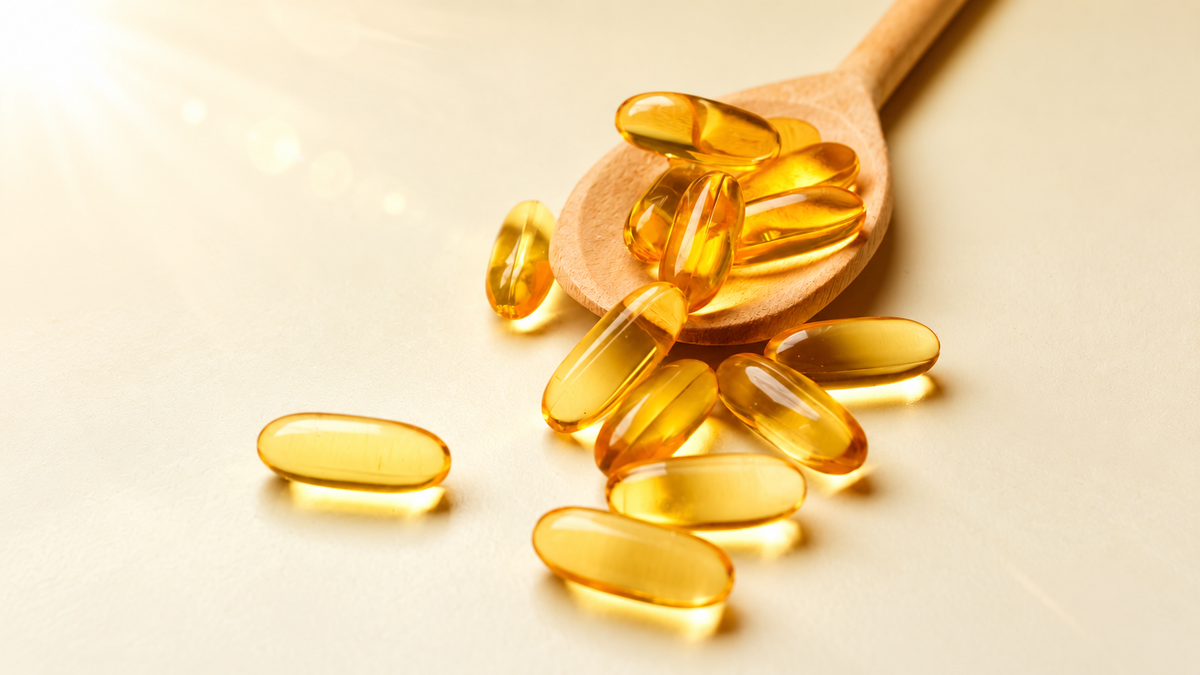
Vitamin D is best known for its role in maintaining normal bones and supporting normal muscle and immune function. It also enhances immune defense by helping white blood cells fight infections and plays a role in cell growth.
Getting enough of the “sunshine vitamin” isn't always straightforward, particularly for people who spend a lot of time indoors or live somewhere with limited sunlight during parts of the year. If you're concerned about your vitamin D status, it's worth speaking to a healthcare professional to find out the dosage and supplementation that’s right for you.
And then there's vitamin B12…
This is the one we're particularly interested in.
Vitamin B12 has a number of important jobs in the body, including supporting normal red blood cell formation and normal nervous system function. When you don't get enough B12, tiredness and weakness can be among the symptoms. A 2025 clinical study (opens in a new tab) of 180 people with vitamin B12 deficiency found that fatigue was the most commonly reported symptom, affecting around two-thirds of participants.
There are several groups of people at a higher risk of B12 deficiency.
Vegans and vegetarians
B12 occurs naturally mainly in animal-derived foods such as meat, fish, eggs and dairy. So if you follow a vegan diet, you'll need a reliable source of B12 from fortified foods or supplements.
Some vegetarians may also have lower intakes depending on how much dairy and eggs they consume, so it is something for them to keep an eye on.
Getting older
Here's another reason B12 deserves attention. Absorption of B12 from food requires gastric acid, pepsin and intrinsic factor for absorption. But as we get older, our ability to absorb B12 becomes less efficient.
The NIH recommends (opens in a new tab) that adults over 50 get most of their B12 from fortified foods or supplements because of this potential absorption issue. B12 in supplements is already in free form and does not require the same digestive processes. If you're in your 50s, 60s, 70s or beyond, B12 is one nutrient worth keeping an eye on.
But here's the interesting bit…
You might expect a nutrition company to say: “B12 gives you energy!”
But that's not quite what the science says. B12 isn't a stimulant. If you already have adequate B12 levels, taking more isn't expected to suddenly give you an energy boost.
The important distinction is between having enough B12 and taking B12 as an energy booster. And there's something particularly interesting here…
B12 has an official health claim for tiredness and fatigue
The European Union (opens in a new tab) has an authorised health claim specifically relating to vitamin B12:
“Vitamin B12 contributes to the reduction of tiredness and fatigue.”
That's an authorised EU health claim. In other words, this isn't just a clever phrase dreamed up by a supplement marketer. The claim is part of the EU's authorised nutrition and health claims framework.
Of course, it doesn't mean that taking B12 will magically cure tiredness. It means that vitamin B12 has a recognised role in contributing to the reduction of tiredness and fatigue. And that's one reason we chose to include it in BeetBoost.
So, why is there 1,000 mcg of B12 in BeetBoost?
BeetBoost contains 1,000 mcg of vitamin B12 per serving.
You might look at that number and think: “Wait… isn't that a lot?”
Yes, it is higher than the daily nutritional reference value. But there's a reason B12 supplements often contain much more than the amount your body needs each day. When B12 is taken orally in large doses, only a small percentage is absorbed. That's why you'll commonly see B12 supplements containing hundreds or even 1,000 mcg.
The NIH also notes that there is no established upper intake level for vitamin B12 because of its low potential for toxicity. So the goal isn't to give you an enormous dose because more must be better. It's about providing a convenient, reliable source of B12 as part of your daily routine.
The BeetBoost approach
We've combined beetroot with 1,000 mcg of vitamin B12 to create a simple daily supplement.
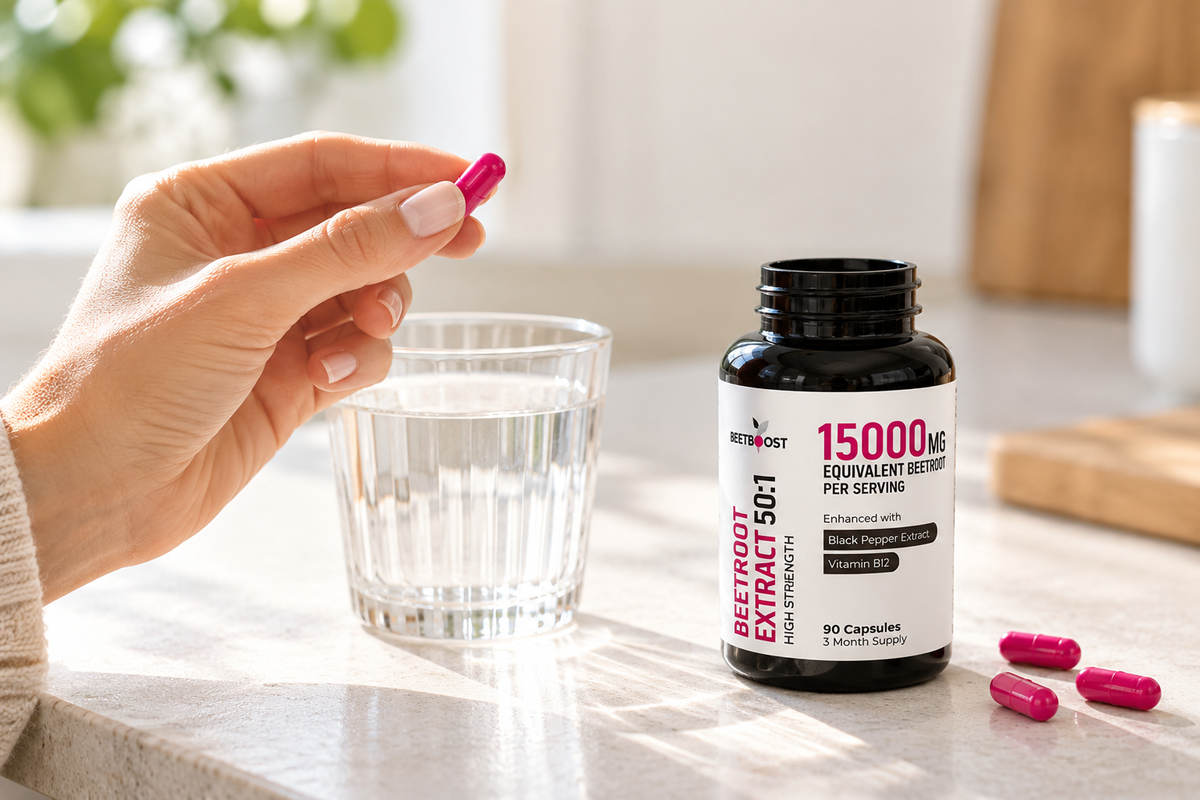
No complicated routine. No trying to remember whether you had enough B12 this week. Just one easy addition to your daily routine.
BeetBoost: beetroot + B12, made simple.
References
- Aditya R Agrawal et al (2024) View source (opens in a new tab)